Most organisations believe they have a reasonable understanding of their spending. The reality is very different. Research shows that most organisations are unable to account for 40% of their actual spend, hidden across shadow IT, decentralised purchasing, poorly timed renewals, and off-contract buying. This gap between what organisations think they spend and what they actually spend represents one of the largest untapped savings opportunities in business operations.
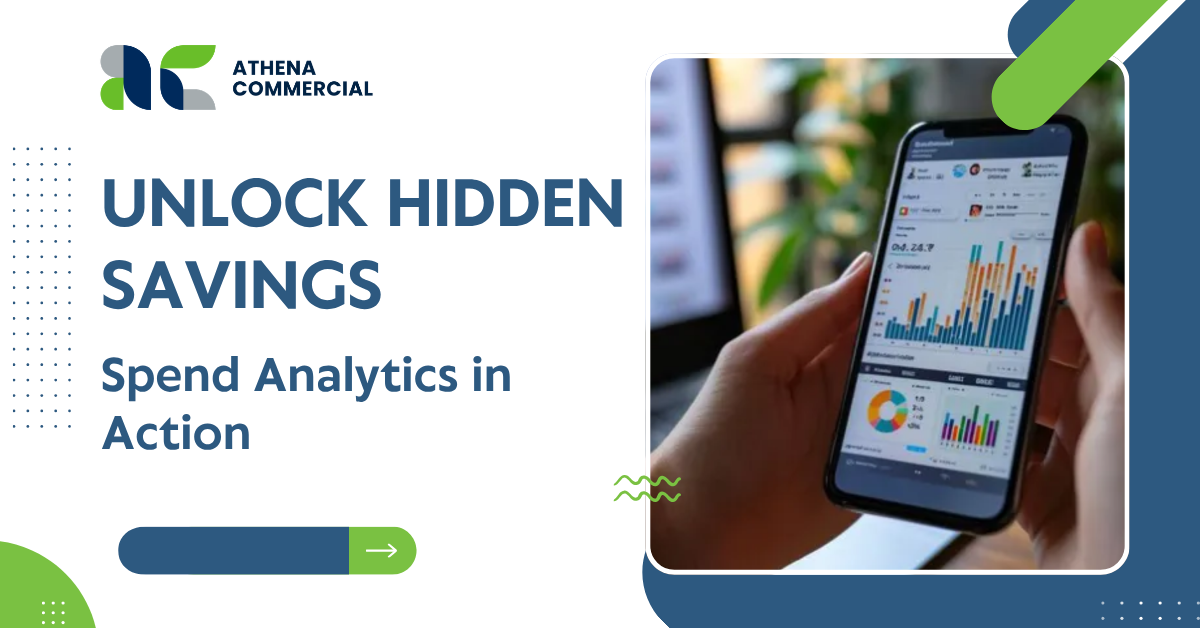
Spend analytics software closes this gap by collecting, cleansing, classifying, and analysing expenditure data to reveal patterns, anomalies, and opportunities that are invisible without systematic data analysis. In this article, we examine the scale of hidden spend in typical organisations, the methodologies that unlock savings, and how your organisation can implement spend analytics to deliver measurable cost reductions.
The Scale of the Problem: Where Your Money Is Really Going
The phrase "hidden spend" does not mean that money is disappearing from your financial records. The transactions appear in accounts payable and general ledger data. What makes this spend hidden is that it has never been classified, aggregated, and analysed in a way that reveals patterns and opportunities.
The statistics are striking. Maverick spend -- purchases made outside of established procurement policies and contracts -- costs organisations 5 to 16% of negotiated savings annually. According to industry analysis, many companies lose 10 to 20% of targeted savings due to maverick buying. In more extreme cases, as much as 80% of an organisation's purchases could be happening off-contract, bypassing the rates that procurement teams spent months negotiating.
These figures represent real money. For a £50 million spend organisation, even the conservative end of a 5% savings range represents £2.5 million in addressable savings. For a £500 million spend organisation, that figure rises to £25 million. These are not theoretical projections -- they are savings that spend analytics consistently identifies in organisations that have never systematically examined their expenditure data.
The Spend Cube: Understanding Your Three-Dimensional Spending Picture
The spend cube is the foundational framework for procurement spend analysis. It organises spending data across three dimensions that, when intersected, reveal insights invisible to any single-dimension analysis.
Dimension 1 -- Suppliers. Who your organisation buys from, across every supplier, vendor, and service provider. This dimension reveals supplier fragmentation, concentration risk, and consolidation opportunities that arise when multiple business units independently select different vendors for similar requirements.
Dimension 2 -- Business Units. Which departments, divisions, or cost centres are generating the spend. This dimension reveals demand patterns, budget adherence, and maverick purchasing by business unit, identifying where procurement policies are being followed and where they are being bypassed.
Dimension 3 -- Category. What is being purchased, classified according to a standardised taxonomy. This dimension reveals category spend distribution, pricing variation between suppliers for the same goods or services, and specification inconsistencies.
The power of the spend cube lies in the intersections. By combining these three dimensions, procurement teams can discover, for example, that three different business units are buying the same category of product from three different suppliers at three different prices. That is an immediate consolidation and negotiation opportunity that no single-dimension report would reveal.
Advanced spend analytics platforms extend beyond these three dimensions to incorporate time (trend analysis), geography (location-based spending patterns), contract status (on-contract versus off-contract spend), and payment terms (cash flow optimisation opportunities).
Maverick Spend: Identifying and Controlling Your Biggest Source of Leakage
Maverick spend is one of the most significant sources of value leakage in procurement, and spend analytics is the primary tool for identifying and controlling it.
Why Maverick Spending Occurs
Maverick spending typically occurs because procurement processes are too cumbersome, driving users to find faster alternatives. Staff may be unaware of preferred supplier agreements. Internal communication about procurement policies may be poor. Decentralised purchasing authority without adequate controls allows independent buying decisions. And urgency-driven purchases bypass normal approval workflows because the formal process is perceived as too slow.
The Financial Impact
The numbers are clear. Maverick spend costs organisations 5 to 16% of negotiated savings annually. Hackett's 2025 research on world-class procurement teams found that by reducing rogue buying and improving contract compliance, top performers achieved 60% less savings leakage compared to their peers. Successful automation implementations typically reduce maverick spending by 15 to 25% within the first year through improved policy compliance and enhanced spend visibility.
How Analytics Solves It
Modern spend analytics tools automate the detection of maverick spending by comparing actual purchasing patterns against contracted terms and preferred supplier lists. They can analyse expenditure by supplier, department, category, and time period to pinpoint anomalies and patterns of non-compliance. AI-powered platforms detect these patterns in real time, enabling intervention before purchases are completed rather than after the money has already left the organisation.
Supplier Consolidation: Turning Fragmentation into Leverage
Spend analytics consistently reveals supplier consolidation opportunities that are completely invisible without systematic data analysis.
Most organisations have significantly more suppliers than they need. Different business units independently select vendors for similar requirements, fragmenting purchasing power across multiple suppliers. This fragmentation reduces negotiating leverage, increases administrative overhead, prevents volume discounts, and dilutes the organisation's ability to build strategic supplier relationships.
Spend analysis typically reveals 5 to 15% savings opportunities through supplier consolidation, contract compliance enforcement, demand management, and rate benchmarking. For a £50 million spend organisation, even the low end of that range represents £2.5 million in addressable savings -- savings that exist in the data but have never been visible because the data has never been properly analysed.
Beyond price reduction, supplier consolidation delivers strategic benefits: improved service levels from deeper supplier relationships, reduced administrative burden from managing fewer vendor accounts, stronger contract compliance, and better risk management through more focused supplier oversight.
Tail Spend: The Overlooked Opportunity
Tail spend represents one of the most overlooked savings opportunities, and one that spend analytics makes systematically addressable for the first time.
Tail spend typically refers to the bottom 20% of transaction value that accounts for approximately 80% of the supplier base -- high-volume, low-value transactions with numerous small suppliers. These are the purchases that procurement teams rarely examine because the individual amounts seem too small to warrant attention.
But the cumulative impact is substantial. Teams that use digital solutions to manage tail spend can cut annual expenditures by 5 to 10% on average. Tail spend is also where maverick purchasing concentrates, where procurement policies are least enforced, where supplier quality is least monitored, and where the organisation is most vulnerable to fraud and compliance risks.
The strategic aim of tail spend management is reducing the number of suppliers and consolidating spend to preferred or key vendors. Analytics enables organisations to identify which tail spend categories are suitable for consolidation, which can be automated through purchasing cards or catalogues, and which warrant managed service arrangements.
AI-Powered Spend Analytics: From Backward-Looking to Predictive
The evolution from traditional spend analysis to AI-powered analytics represents a step change in capability that is transforming how procurement teams operate.
Traditional spend analysis was a periodic exercise: collect data, clean it manually, classify it over several months, produce a report, and hope the findings were still relevant by the time the analysis was complete. AI-powered platforms have fundamentally changed this model.
Automated Classification. AI can automatically classify spending data against standardised taxonomies, a task that traditionally required months of manual effort. Organisations implementing intelligent spend analysis achieve a reduction of up to 90% in time spent on manual data preparation and analysis.
Accelerated Insight Delivery. AI-powered analytics can accelerate the identification of savings opportunities by three to five times compared to traditional methods. Modern platforms deliver insights from imperfect data in weeks, not years.
Real-Time Monitoring. Unlike periodic spend reports, AI-powered platforms provide continuous monitoring with real-time alerts for spending anomalies, contract deviations, and emerging savings opportunities.
Predictive Capability. Advanced platforms have evolved from backward-looking reporting to intelligence that proactively identifies savings opportunities before they are missed, enabling procurement teams to act on emerging patterns rather than historical data.
Democratised Access. Modern platforms make spend intelligence accessible to category managers and sourcing leads as part of their daily workflow, not locked behind analyst-only tools. BT Sourced's experience with their analytics platform demonstrated this transformation: category managers could identify high-growth suppliers or pinpoint purchase orders raised against suppliers without a contract in "essentially two clicks," and the tool became "part of the procurement team's daily life."
Real-World Results: What Organisations Are Achieving
The case study evidence for spend analytics is compelling:
BT Sourced transformed their procurement analysis capability by implementing an analytics platform that enabled category managers to identify opportunities instantly rather than through lengthy manual research. The tool became embedded in daily operations, fundamentally changing how the procurement team identified and pursued savings.
CACI implemented a comprehensive source-to-pay platform, becoming virtually 100% paperless and onboarding 99% of its 40,000 suppliers. The result was a 30% reduction in operational costs -- a transformation that demonstrates the scale of improvement possible when analytics is combined with process automation.
Tropic reported that in the first half of 2025, their platform negotiated $362 million in customer spend, delivering $56 million in verified savings -- a 15.5% average savings rate. Platform users reported 21% savings on vendor costs and recouped their platform investment within the first quarter, achieving a 3x first-year ROI.
These are not outlier results. They represent what becomes achievable when organisations move from intuition-based procurement to data-driven spend management.
Implementation: From Data to Savings
Modern spend analytics implementations can deliver value rapidly when properly structured. A business-case-first approach starts delivering insights in weeks, proves ROI at each milestone, and expands based on demonstrated outcomes.
The typical implementation follows a structured process:
1. Data extraction from ERP, accounts payable, purchasing, and procurement card systems
2. Data cleansing and enrichment to resolve inconsistencies, duplicates, and missing classifications
3. Classification against a standardised taxonomy using AI-assisted tools
4. Analysis to identify savings opportunities, compliance gaps, and risk areas
5. Reporting and dashboard configuration tailored to stakeholder needs
6. User training and adoption support to ensure insights translate into action
Initial analysis typically reveals immediate quick wins -- duplicate payments, pricing errors, off-contract purchases -- alongside longer-term strategic opportunities such as supplier consolidation, demand management, and category strategy development. The quick wins build credibility and momentum while the strategic initiatives deliver sustained value.
Key success factors include executive sponsorship, cross-functional data access, clear ownership of action items arising from analysis, and integration with procurement processes to ensure insights translate into realised savings rather than interesting reports.
How Athena Commercial Can Help
At Athena Commercial, we combine deep procurement expertise with practical technology implementation experience to help organisations unlock the savings hidden in their spend data. Our approach goes beyond software deployment -- we work with your team to build the analytical capability, category strategies, and governance frameworks needed to sustain savings over the long term.
We help organisations select and implement the right spend analytics platform for their needs, configure it to address their specific savings opportunities, and develop the internal capability to operate it effectively. Our consultants bring practical procurement experience to the implementation, ensuring that analytical insights are translated into actionable sourcing strategies and measurable commercial outcomes.
To explore how spend analytics could unlock hidden savings in your organisation, visit www.athena-commercial.co.uk (add link - https://www.athena-commercial.co.uk) or contact our team to discuss your requirements.